Wednesday, June 9, 2021

10 Health Benefits of Drinking Green Tea with Lemon

Green tea with lemon juice is a soothing beverage you can enjoy at any time of day.

It’s full of flavor, delicious, and easy to prepare.

It’s also highly nutritious, and research has found that it’s associated with a long list of potential health benefits.

Here are 10 of the top health benefits of green tea with lemon.

Green tea and lemons are both high in antioxidants, compounds that help protect against inflammation and cell damage due to oxidation.

Green tea, in particular, is rich in antioxidants such as epigallocatechin gallate (EGCG), quercetin, chlorogenic acid, and theogallin (1Trusted Source).

Lemons are a good source of the antioxidants ascorbic acid, hesperidin, naringin, and ferulic acid (2Trusted Source).

Research suggests antioxidants play a key role in health and disease and may protect against chronic conditions, including heart disease, diabetes, cancer, and obesity (3Trusted Source).

Summary

Green tea and lemons are high in antioxidants, which can help protect against inflammation and chronic conditions.

Green tea with lemon can be a great addition to a healthy weight loss diet.

In fact, multiple studies have suggested that green tea can support weight loss and boost fat burning.

According to one review of 15 studies, drinking green tea with higher amounts of EGCG for at least 12 weeks was linked to decreases in body weight and body fat (4Trusted Source).

One study in 115 women also found that taking green tea extract for 12 weeks led to significant reductions in body weight, body mass index, and belly fat (5Trusted Source).

Although scientists need to do more research in humans, some studies suggest that lemons could also promote weight loss.

One animal study found that when mice were treated with citrus flavonoids, the size of their fat cells decreased. The citrus flavonoids also increased metabolism in mice fed a high fat diet (6Trusted Source).

Another animal study from 2008 found that feeding lemon polyphenols to mice on a high fat diet helped prevent them from gaining weight and accumulating fat (7Trusted Source).

Summary

Studies suggest that drinking green tea may help decrease body weight and body fat. Some animal studies have found that certain compounds in lemons could also help prevent weight gain.

Interestingly, some research suggests that green tea could help improve blood sugar control and protect against type 2 diabetes.

According to one review, drinking tea is linked to a lower risk of type 2 diabetes and diabetes-related complications (8Trusted Source).

Drinking tea regularly may also reduce inflammation and enhance the body’s ability to use insulin efficiently. Insulin is the hormone that moves sugar from the bloodstream into the cells (8Trusted Source).

One study in 92 people with type 2 diabetes also found that taking green tea extract for 16 weeks reduced insulin resistance. This may help support better blood sugar control (9Trusted Source).

However, other studies have found mixed results, and scientists need to do more research on green tea and diabetes (10Trusted Source11Trusted Source12Trusted Source).

Summary

Some studies have linked drinking green tea to a lower risk of type 2 diabetes and insulin resistance.

Research has found that both green tea and lemons are associated with several benefits for heart health.

In fact, one review reported that citrus flavonoids, including those found in lemons, may suppress inflammation, improve the function of the blood vessels, and support healthy cholesterol levels (13Trusted Source).

Another study found that people who consumed lemons daily had decreased blood pressure levels, especially when they also walked regularly (14Trusted Source).

Similarly, an analysis of nine studies showed that people who regularly consumed green tea had a lower risk of heart disease, heart attack, and stroke than those who didn’t drink green tea (15Trusted Source).

What’s more, a recent review of 24 studies also found that drinking green tea could help lower high systolic and diastolic blood pressure, both of which are risk factors for heart disease (16Trusted Source).

Summary

Studies have found that consuming both green tea and lemons is associated with improved heart health and reductions in several risk factors for heart disease.

Although further research in humans is needed, some studies suggest that green tea and lemon may offer several potential benefits for brain health.

For instance, one review of eight studies found that drinking green tea was associated in some studies with a reduced risk of dementia and cognitive impairment (17Trusted Source).

Another study found that consuming green tea frequently could improve the metabolism of certain proteins involved in the development of Alzheimer’s disease (18Trusted Source).

Some test-tube and animal studies have also found that certain compounds in citrus fruits may reduce inflammation, protect brain function, and prevent the buildup of plaque in the brain, which could contribute to Alzheimer’s disease (19Trusted Source).

Summary

Drinking green tea is linked to a lower risk of dementia, impaired brain function, and Alzheimer’s disease. Test-tube and animal studies also suggest that compounds found in lemons may improve brain function and protect against Alzheimer’s disease.


Source: https://www.healthline.com/nutrition/green-tea-with-lemon#2.-Promotes-weight-loss
 

Monday, March 29, 2021

The surprising habit that can reverse aging — and other science-backed strategies

 When you’re young, “biology can seem so distant,” says Andrew Steele, scientist and author of “Ageless: The New Science of Getting Older Without Getting Old.” “It’s quite easy to avoid all of that stuff....”

But when you are younger is exactly the time to start thinking about how to optimize your lifestyle to age well.

“There are huge strides being made in aging biology” that point to ways that we can potentially slow the aging process, says Steele, 35, whose research focuses on the ways that the body ages at a cellular level.

“We have loads and loads of different ways in the lab to slow down and reverse this process.”

Tweaks to your lifestyle can go a long way: A 2018 study from Harvard found that people who followed five habits — eating a healthy diet, exercising regularly, keeping a healthy body weight, not drinking excessive amounts of alcohol and not smoking — increased life expectancy by up to 10 years.

Here are three simple habits Steele says you can add to your routine today to push back on the aging process:

Take care of your teeth

It may sound surprising, but there is a connection between your oral health and aging.

“There’s quite good evidence accumulating now that brushing your teeth can stave off heart disease and maybe even dementia,” Steele says.

It all comes back to inflammation, which is a normal part of the body’s defense to injury or infection, according to the National Institutes of Health.

Poor oral hygiene can lead to an excess of bacteria in your mouth that causes tooth decay and gum disease. “Basically, that is chronic inflammation constantly buzzing around in your mouth,” Steele says.

Chronic low-level inflammation causes your immune system to become less effective at dealing with actual threats, such as age-related disease, Steele says.

In other words, chronic inflammation fuels aging, but “by brushing your teeth, you can potentially slow down that process,” Steele says.

Wondering if you’re brushing enough? A Scottish study found that people who brushed their teeth twice a day had a lower heart attack risk than those who only brushed once a day.

And the American Dental Association recommends brushing two times a day for two minutes using a toothpaste with fluoride, and flossing daily.


Stay active

From reducing inflammation to boosting the production of collagen cells, exercise benefits several aspects of your biology on a cellular level, which in turn affect how you age, Steele says.

Research has shown that people who have consistently high levels of activity have longer telomeres, which are caps at the end of chromosomes that shorten as you age. Adults with high physical activity levels (defined as 30 minutes of exercise five days a week) had telomeres that were nine years “younger” than those who are sedentary, a 2017 study found.

And cardio exercise appears to have a more robust effect on aging than resistance. A 2018 study found that high-intensity interval (aka HIIT) and endurance training lengthens telomeres better than resistance training.

Exercised muscles also have more mitochondria, which is often referred to as the “powerhouse” of the cell that generates most of its energy, Steele says. This is key to aging, because research shows that as you age, your mitochondrial quality and activity declines, which is leads to the development of a wide range of age-related diseases.

It doesn’t take much exercise to drive change: A 2013 study out of Harvard found that as little as 15 minutes of exercise every day increased life expectancy by three years.

Get good sleep

Sleep is like “spring cleaning” for your brain, according to Steele. During sleep, your brain essentially flushes out toxins, including some that are associated with Alzheimer’s disease.

But not sleeping too much is also important (just as important as getting enough sleep, in fact): Systemic reviews of research on sleep and mortality have shown that getting less than seven or eight hours of sleep is associated with an increased chance of death, but sleeping more than 11 hours a night is associated with an even larger increase.

Prioritize sleep hygiene, or habits that help you sleep better, such as having a consistent bedtime, avoiding caffeine and alcohol before bed and removing electronics from your bedroom.

Source: https://www.cnbc.com/2021/03/28/andrew-steele-how-to-fight-aging-and-live-healthier.html

Wednesday, March 10, 2021

How to Lose Belly Fat: 30 Ways


With spring right around the corner, many of us are thinking more about our fitness goals, with a toned midsection topping the list. Sure, a strong, lean stomach looks great. But it comes with tons of other benefits too, like improved posture, less back pain, improved heart health and more.

In addition to ab workouts, losing belly fat is crucial to this process. The first step to losing stubborn belly fat? Understanding how extra pounds pile onto that part of the body in the first place.

The science behind belly fat

Body fat is divided into two categories: subcutaneous (under the skin) and visceral (around organs). Belly fat is an accumulation of visceral fat around the abdominal organs, Dr. Spencer Kroll, MD, PhD, FNLA, explains.

“There is now a realization that visceral fat cells secrete hormones, much like other endocrine organs in the body such as your thyroid or pancreas,” says Dr. Kroll. “Thus, what was once thought of as the accumulation of poor eating and lack of exercise has actually been shown to be metabolically active: a hormone secreted from visceral fat have far-reaching effects on other tissues in the body.”

The hormones secreted from visceral fat cause inflammation and coagulation in the body. This explains why people with large amounts of visceral fat are more likely to have diabeteshigh cholesterol and poor heart health.

The bottom line: visceral fat makes up only a small proportion of body fat but it is a key player in a variety of health problems, Dr. Kroll explains. So, in order to lose belly fat, you need to make visceral cells less active. This can be accomplished through eating healthier, exercising, and other lifestyle changes.

Ready to start losing belly fat? Here are 30 ways to make it happen.

1. Cardio aerobic exercise

To burn and reduce visceral fat, Dr. Kroll recommends 30 minutes of cardio aerobic exercise a day.

Also, it’s important to keep in mind that targeted exercise for the abdomen does not help the reduction of visceral fat. In other words, crunches and sit-ups won’t help reduce belly fat. First, you need to eliminate the fat through cardio aerobic workouts, which get your heart rate up. Once the fat is gone, you can do sit-ups and crunches to tone the area.

2.  Intermittent fasting

While fasting is a controversial weight-loss tactic, it is considered safe and effective when done correctly.

“Intermittent or Circadian fasting allows your system to reduce the excess glucose in the bloodstream and therefore reduce the amount of glycogen stored in your body (which manifests as fat), says Dr. Alexandra Trevisan, Doctor of Chiropractic and Functional Medicine and holistic weight loss expert. “Fasting then utilizes your adipose tissue (your fat storage in your body which is there to be called on for energy) for energy for daily functioning and breaks down belly fat at the same time.”

3. Eliminate trans fats and simple carbohydrates

When it comes to fat formation, certain foods are worse than others. Trans fats, found in hydrogenated vegetable oils and fructose-sweetened foods are particular culprits, Dr. Kroll states.

Simple carbohydrates also lead to more fat accumulation. Your body packs away any additional unnecessary consumed carbohydrates as fat and stores it around your organs.

4. Try a healthy carb cycle

While you should steer clear of simple carbs, not all carbs are bad. “Have certain days of the week where you allow for more healthy carbohydrates than normal (whole grains that are gluten-free),” Dr. Trevisan explains. “This will prevent the body from plateauing, causing variability to the system and expediting weight loss.”

5. Eat real, whole foods 

Whole foods include fruits, vegetables, nuts and whole grains. “Your body can process foods that either has a mother or grow from the ground,” says Dr. Trevisan. “Foods made in a lab without real ingredients are stored as belly fat.”

6. Read nutrition labels

Some foods claim to be low fat but are actually high in carbohydrates and other added sugars. Ultimately, it’s the reduction of the right kinds of fats and carbohydrates that can lead to visceral fat reduction, Dr. Kroll states.

“The consumption of more complex carbohydrates will lead to a sustained metabolism as opposed to the peaks and valleys that occur with simple carbohydrate consumption, which in turn leads to fat accumulation.”

As a general rule, avoid all processed foods.

7. Cut the sugar

Starches and grains break down into sugar (glucose). While these have beneficial factors for our bodies in small amounts; added sugar (sugar cane, high fructose corn syrup, etc.) do not, says Dr. Trevisan. Excessive consumption of sugar gets stored as belly fat.

8. Keep track of your levels by measuring your waist circumference

This is an effective technique that will help you keep track of your progress. Measure your waist circumference at your belly button line. “In almost all people it is more than their waist circumference at their belt, especially when they wear their pants below their stomach,” says Dr. Kroll. “Measuring at the belly button line is a much better indicator of visceral fat than the number of pounds on the scale.”

9. Eat more healthy fat

Incorporating healthy fat from properly raised animal products (grass-fed beef, antibiotic hormone-free eggs, fatty fish) as well as avocados, coconut oil, nuts and seeds give your body the nutrients it needs for brain activity and digestive function, Dr. Trevisan explains. Small amounts of healthy fat at each meal are conducive for weight loss when not combined with sugar/starches.

10. Develop better sleep habits

Poor sleep hygiene in people who sleep five hours or less a night accumulated significantly more visceral fat.  And in young people, sleeping over eight hours a night also leads to more visceral fat, Dr. Kroll says, so there is definitely a “sweet spot” for the proper amount of sleep to minimize visceral fat.

11. Eat balanced meals

A balanced meal is one that contains the major food groups. Sandy Younan Brikho, MDA, RDN registered dietitian nutritionist, weight loss expert, and founder of The Dish On Nutrition, recommends following the MyPlate Method. “It will help you lose belly fat because it helps keep you full and satisfied throughout the day, incorporates the major food groups, and helps with portion control,” Brikho says.

“For example, cover half of your plate in a salad, a quarter of it in pasta, and a quarter of it in meatballs.”

12. Weight training

Loading your body with resistance causes muscle adaptation.“This adaptation results in your body burning more calories at rest (AKA a faster resting metabolic rate),” says Dr. Trevisan. “Weight training will help you to burn more while at rest, in turn burning more belly fat.”

13. Find healthy ways to reduce stress

Increased anxiety and stress also lead to higher amounts of visceral fat in the abdominal area. While stress isn’t shown to affect subcutaneous fat, it does impact visceral fat, Dr. Kroll explains. Popular stress management techniques include meditation, journaling, yoga and other types of exercise.

Related: Best Journals for Anxiety 

14. Cover half of your plate in vegetables

This will help increase your fullness, prevent overeating, encourage portion control, and help you get the nutrients you need, Brikho says. In doing so, you won’t be tempted to eat too much other higher-calorie foods and as a result, it will be easier to lose belly fat.

15. Eat enough protein

Protein helps keep you full and prevents overeating later in the day. The specific amount of protein varies from person to person. How much do you weigh? Dr. Trevisan says it’s is a good indicator of protein levels (in grams) to consume when focusing on physique and belly fat loss.

16. Walk more often

Mixing up your workouts is important. And while it’s important to keep cardio in your workout regimen, never underestimate the power of walking.

“If your body is constantly in a fight or flight state (overactive sympathetic nervous system) it will hold onto weight for protection,” says Dr. Trevisan. “Increased stress hormones are secreted into the system causing the body to hold onto weight. Moving the body in gentle, consistent ways such as walking helps to remind the body that it’s safe to calm down while moving about, reinforcing that a threat is not imminent; allowing for the release of fat for protection.”

Related: Not Into HIIT? Walking Is Actually a Great Way to Lose Weight–and These Tips Will Help

17. Snack on healthy treats throughout the day

“Often, clients will tell me that they are feeling hungry throughout the day, which leads them to binge eat at their next meal,” Brikho explains. “Instead, incorporate a snack that combines a protein with either a fruit, vegetable, or carbohydrate.”

For example, she recommends one slice of whole-grain bread, peanut butter, and a banana. This will help keep you satisfied until your next meal, prevent overeating later in the day, and will help you lose weight. This will ultimately lead to loss of belly fat.

18. Hydrate

You cannot lose weight if your body is not lubricated enough to excrete the toxins in your system, Dr. Trevisan explains. Half your body weight in ounces is the general rule.

19. Move your body in a fun way

While healthy eating is primarily what helps you lose belly fat, exercise will help you reach your goals sooner. Brikho suggests exercising for 30 minutes each day. “You don’t need to be doing vigorous activity daily in order to see results,” she says. “It could be something as simple as walking, doing squats during commercials while watching tv, gardening, or going for a bike ride. If it is fun and if you are enjoying it, then you are more likely to keep it up and therefore, more likely to lose belly fat.”

The reason so many people struggle with weight loss is that they view it as a chore. But working out can be fun if you choose to see it that way.

20. Eliminate or reduce alcohol intake

Too much alcohol can disrupt liver function, which is responsible for filtration in the body, Dr. Alice Fong, MD, Founder and CEO of Amour de Soi Wellness, explains. If your body is not properly filtering correctly, that can disrupt hormonal balance and lead to belly fat.

21. Decrease calories in your coffee

Yes, plain black coffee can be boring, but thankfully, there are ways to make it taste better without adding inches to your waistline. Brikho recommends the following nutritious tips to make your coffee taste good and help you reach your weight loss goals:

  • Add Manuka Honey, which is a great low calorie, healthy alternative to sugar or other sweeteners and it’s great to include in your daily coffee!
  • Add 1 tbsp of coffee mate’s low-fat vanilla creamer to a cup of coffee for a delicious 25 calorie cup of coffee
  • Add almond extract and vanilla to your black coffee
  • Add 1-2 teaspoons of cinnamon to your coffee with some steamed nonfat milk

22. Eat your meals at consistent times of the day every day

Consistency is key in order to develop healthy habits and lose weight. When you eat at the same times, your body can then start to regulate better and have a routine for digestion, Dr. Fong says.

23. Eat out in a healthy way

While restaurants offering a ton of tasty, not-so-healthy options (mostly in the takeout form right now), there are a few simple ways to cut calories.

“Eating out is fun and you don’t need to sacrifice that in order to be healthy,” Brikho explains.  “You can share a plate with your friend, coworker, or family member while eating out, which will decrease your portion size, decrease your calorie intake, decrease your fat intake depending on what you ordered, and allow you to still enjoy your favorite meals.”

Another helpful tip is ordering an appetizer that includes vegetables such as a salad, edamame, cucumber wrapped sushi, or Brussels sprouts, for example. That will help you feel full and eat less during the main course.

Lastly, limit eating out to 1-2 times a week. “While we are able to eat out and lose weight, it is still important to remember that it is what we do more often that will impact our health and if we are eating out daily, then it will make it more challenging to reach our goals,” Brikho adds.

So, dine out (or order in) and enjoy your favorite foods, but do it in moderation.

24. Eliminate gluten

Even if you don’t have a gluten intolerance, it’s beneficial to cut it out of your diet. “Gluten can cause inflammation in the body and too much can cause intestinal permeability (leaky gut syndrome), which can cause food sensitivities and gut health issues,” Dr. Fong states. “An unhealthy gut leads to weight gain and belly fat.”

Related: Going Gluten-Free Has Some Major Benefits – Here Are the Ones You Should Know About

25. Don’t go on a “diet”

In fact, remove the word “diet” from your vocabulary altogether.

“Most diets are restrictive, challenging to follow, and are unrealistic to keep up with long-term,” says Brikho. “If you can’t keep up with it long-term, then often, your results won’t last long-term. Find something that you feel like you can do forever and something that you enjoy. If you love what you’re eating, and if you’re losing weight in the process, then you will not only lose belly fat, but also keep it off.”

26. Eat gut-friendly foods

A healthy gut is essential for optimal health. Dr. Pamela Peeke, chairman of the Jenny Craig Science Advisory Board, recommends eating a diverse range of foods.

“The bacteria in your body is quite diverse, and your diet should be too,” says Dr. Peeke. “Grabbing five vegetables and several fruits a day is a great start.” Fermented foods are also important. Yogurt, kimchi, sauerkraut, kefir, kombucha and tempeh are rich in lactobacilli, a bacteria that support your health, she adds.

27. Make it easy

If it isn’t convenient, it will make losing weight and losing belly fat more challenging. Have snacks that are easy to prepare or ready to go like a banana and peanut butter, or an apple and string cheese, Brikho says.

In addition, if you don’t have time to prepare meals, then either cook several servings of a dish on Monday and eat it for lunch for the rest of the week, or make a recipe that is prepared in under five minutes, she adds.

28. Ditch the artificial sweeteners

Artificial sweeteners do not contribute to gut health and successful weight loss, Dr. Peeke states. These products upset the balance of gut bacteria favoring Clostridium and Enterobacteriaceae which are associated with disease. Instead, use monk fruit or natural honey for flavor.

29. Incorporate more prebiotics in your diet

Along with fermented foods, prebiotics are great for the gut. These are foods that promote the growth of beneficial bacteria in your digestive system, Dr. Peeke explains. These include garlic, onions, leeks, asparagus, bananas, barley, oats, apples, cocoa, flaxseeds, and wheat bran.

Healthy Now Newsletter

Get good vibes and health tips delivered right to your inbox!

30. Make one change at a time

Taking small steps on a consistent basis is what leads to long-term results. “We can all make 100 changes to our lifestyle or our diets, but if you focus on too many at the same time, it will be challenging to keep up with them all, says Brikho. “The biggest recommendation I can make is to focus on only ONE small change you want to make, master that by making it into a new habit, and then, pick your next small change.”

Next up, here are 13 reasons why you’re not losing weight

Sources

  • Alexandra Trevisan, Doctor of Chiropractic and Functional Medicine; Holistic Weight Loss Expert
  • Spencer Kroll, MD, PhD, FNLA
  • Sandy Younan Brikho, MDA, RDN, is a registered dietitian nutritionist, weight loss expert, and founder of The Dish On Nutrition
  • Dr. Alice Fong, MD, Founder and CEO of Amour de Soi Wellness
  • S. Department of Agriculture: “MyPlate

    Source: https://parade.com/1172732/kaitlin-vogel/how-to-lose-belly-fat/

Friday, January 8, 2021

10 exercises that you can do in 10 minutes to lose belly fat

A saggy and flabby belly is a major area of concern for most of the people. Unhealthy food choices, poor lifestyle habits and sitting all day long in front of the laptops lead to fat accumulation particularly in the mid-section, making your clothes feel tighter. A bulging belly not only makes you feel conscious about your look but is also unhealthy. This type of fat is referred to as visceral fat, which is linked with type 2 diabetes, heart disease, and other conditions. The most annoying thing about abdominal fat is that it is hard to lose, especially if you do not have enough time to spare in the gym due to your busy schedule. Luckily, even 10 minutes a day can help you come to shape. Here are 10 exercises that work particularly on your abdominal muscles and help to burn all those extra fat from the mid-region. You need to do each of these exercises for 45 seconds, followed by 15 seconds of resting period.

readmore

02/11​Flutter kicks

Step 1: Lie down on your back with your legs together and hands underneath your buttocks.

Step 2: Lift your right leg off the ground slightly past the hip height. At the same time lift the left leg so it hovers a few inches off the floor. Your back should be on the ground.

Step 3: Hold this position for 5 seconds, then switch the position of the legs, making a flutter kick motion.

Step 4: To make this exercise more challenging, lift your head and neck off the floor.

03/11​Kettlebell Swing

Step 1: Stand with your feet shoulder-width apart and hold a kettlebell from the handle with both hands.

Step 2: Bend your knees slightly, push your hips back, and swing the weight between your legs.

Step 3: Stand up, contract your glutes and swing the kettlebell up to about chest height.

Step 4: At the top of the momentum, lock your elbows, keep core tight, and quads and glutes contracted. Return to the squat position and repeat.

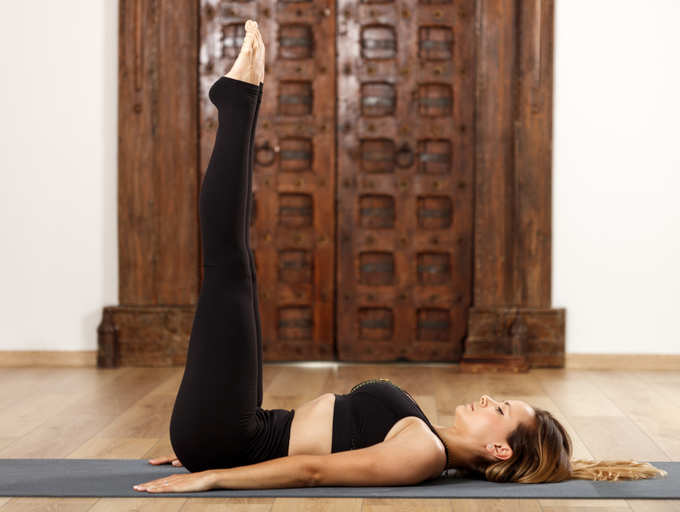
04/11Leg raise

Step 1: Lie down on your back with your legs straight and together.

Step 2: Place your hands by your side and keep your legs straight and lift them to the ceiling until your butt comes off the floor.

Step 3: Slowly lower your legs back to the ground.

Step 4: Wait for 2-3 seconds then again take your legs up.

05/11​Bhujangasana or Cobra pose

Step 1: Lie on your stomach with your feet wide apart from each other and hands stretched overhead.

Step 2: Join both your legs and rest your forehead on the ground.

Step 3: Pull back your hands underneath your shoulders (palms resting by the side of chest), keeping your elbows close to the body.

Step 4: Take a deep breath and gently lift the upper half of your body.

Step 5: Breathe in and out in this pose for 4-5 seconds and then come back to the starting position.

06/11​Leg ins and outs

Step 1: Sit down on the ground with your knees bent and feet placed firmly on the ground.

Step 2: Keep your hand next to your hips. Your entire body weight should be on your butt and hands.

Step 3: Slowly extend your legs out and back in towards your chest.

07/11​V-ups

Step 1: Lie on your back and extend your arms behind your head. Feet should be kept together and toes pointed.

Step 2: Keeping your legs straight, lift them up and at the same time raise your upper body off the floor.

Step 3: Keeping your core tight, reach out for your toes.

Step 4: Lower yourself and return back to the original position

08/11​Mountain Climbers

Step 1: Get into a high plank position with your hands placed directly under your shoulder and toes tucked in. Your back should be in a straight line.

Step 2: Bend your right knee and bring it near your chest, pause and then take it back to its original position.

Step 3: Repeat the same with your left leg. It should look like you are running on your hands and knees.

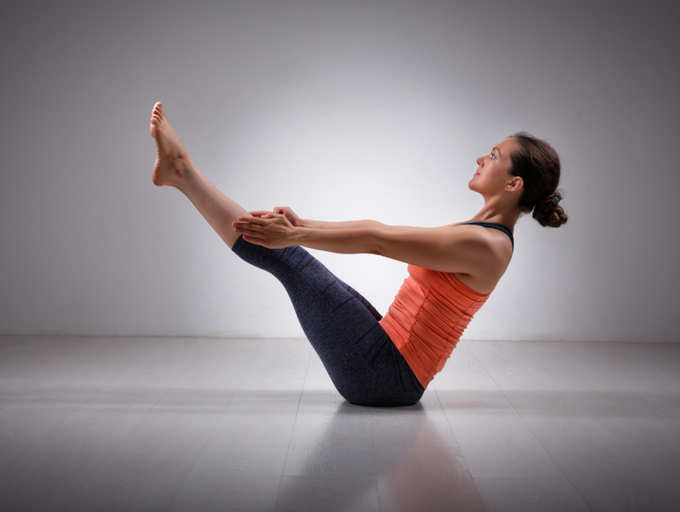
09/11​Russian Twist

Step 1: Sit down on the floor with your knees bent and feet lying flat on the ground.

Step 2: Lean back slightly so your torso and thighs form a V-shape or a 45-degree angle.

Step 3: Clasp both your hands in the front and lift your feet slightly off the ground.

Step 4: Engage your core muscles to twist your torso first to the right, then back to centre, and then to the left.

10/11​Side plank with leg lift

Step 1: Lie on your right side and balance your body weight on your right forearm and right leg.

Step 2: Lift your hips in the air to form a straight line from shoulders to ankles.

Step 3: While keeping your torso stable, lift your left leg without bending your knee.

Step 4: Take your left leg up (1 foot) then bring it back to the starting point. Try not to drop your hips.

11/11​Reverse Crunches

Step 1: Lie on your back comfortably with your legs stretched and arms resting by your side.

Step 2: Bend your knees and lift them off the floor to bring them to your chest level. This is the starting point.

Step 3: Roll your pelvis upward so that your knees come close to your forehead.

Step 4: Hold the pose and then lower the pelvis back to the starting position, keeping your knees near your chest.

Source: https://timesofindia.indiatimes.com/life-style/health-fitness/fitness/best-exercises-to-lose-belly-fat-10-exercises-that-you-can-do-in-10-minutes-to-lose-belly-fat-how-to-burn-belly-fat-fast/photostory/80154267.cms?picid=80154326

Saturday, January 2, 2021

Jerry Seinfeld: Transcendental Meditation and weight training will 'solve just about anyone's life'


Comedian Jerry Seinfeld believes there are just two healthy habits that “could solve just about anyone’s life”: Transcendental Meditation and weight training, he said during a recent episode of the podcast, “The Tim Ferriss Show.”

Seinfeld, 66, explained that incorporating these techniques into his routine have helped him stay productive, focused and creative throughout his career. Here’s what you need to know about weight training and Transcendental Meditation:

TM: ‘The ultimate work tool’

Transcendental Meditation (or TM) is a proprietary form of meditation that requires sitting for 20 minutes twice a day and repeating a mantra. (TM is taught by certified instructors and costs $380 to $960 on a sliding scale.)

Oprah Winfrey, hedgefund billionaire Ray Dalio and even singer Lady Gaga are proponents of TM, and credit much of their success and productivity to the practice.

Seinfeld agrees, calling TM “the absolutely ultimate work tool.”

So, what makes this type of meditation so special? Practicing TM “allows the active thinking mind to just, all of it to just settle down, and experience quieter levels of thought,” Bob Roth, TM instructor and CEO of The David Lynch Foundation, said in a 2014 YouTube video.

According to Seinfeld, TM helps to reduce stress and increase energy and focus. “As a standup comic, I can tell you, my entire life is concentration fatigue,” he said. “Whether it’s writing or performing, my brain and my body, which is the same thing, are constantly hitting the wall. And if you have [TM] in your hip pocket, you’re Columbus with a compass.”

Seinfeld practices TM twice a day or “any time I feel like I’m dipping,” he said. For example, if he isn’t feeling inspired during a writing session, he will meditate. “If I sit down and the pen doesn’t move for like 20 minutes, I know I’m out of gas,” he said.

Weight training three times a week

Seinfeld’s workout routine includes a mix of lifting weights for an hour and interval cardio training three times a week.

Seinfeld initially got into weight training by doing Bill Phillips’ “Body For Life” program, a 12-week diet and exercise regimen that includes exercising six times a week (three days for lifting weights and three days of high-intensity interval training) and eating six small meals a day. Now exercise is a crucial part of his daily routine.

“There are a lot of days where I want to cry instead of do it because it really physically hurts,” Seinfeld said. “But I just think it’s very balancing to the forces inside humanity that I think are just, they overwhelm us.”

There’s some science to this healthy habit: Studies have shown that resistance training workouts (exercises that strengthen your muscles using external resistance, like free weights, machines or your own bodyweight) can relieve symptoms of anxiety.

The physical activity guidelines for Americans suggest that adults get 150-300 minutes a week (or 20-45 minutes a day) of moderate-intensity activity, or 75-150 minutes a week (or 10 to 20 minutes a day) of vigorous-intensity aerobic physical activity. 

Check out: Jerry Seinfeld: ‘Success is the enemy of irritability and crankiness’ — how to stay productive and motivated


Source: https://www.cnbc.com/2021/01/01/seinfeld-meditation-and-weight-training.html


Jerry Seinfeld: ‘Success is the enemy of irritability and crankiness’ — how to stay productive and motivated

It’s been more than 20 years since Jerry Seinfeld’s eponymous television show, which ran for nine seasons, ended. But Seinfeld, 66, still works as a comic and made $51 million dollars in 2020, according to Forbes.

So to what does Seinfeld credit his creativity and career longevity? “Having a very cranky nature,” he said during a recent episode of the podcast, “The Tim Ferriss Show.”

While Seinfeld may have been partially joking, he does have a process. Here the tips that keep Seinfeld motivated — and you can use them, too.

Accept frustrations

Seinfeld said the majority of his job requires writing, editing and developing jokes, often re-writing every word in a joke several times on a legal pad until it feels perfect. Indeed, “work time” can be incredibly frustrating and occupying, he said.  

But that’s the same drive that keeps Seinfeld working: “Success is the enemy of irritability and crankiness,” he said. “Because now you have money, and you can remove the difficulties from your life and that’s not good.”

As someone who has made a lot of money, Seinfeld said, “the thing that did that really solve almost all of that issue is I got married,” he said. Being married and having kids means that the material will “never run out,” he said.

Set a time limit

“If you’re going to write, make yourself a writing session,” or a determine a digestible time that you’re going to use to write or work on something, Seinfeld said. For example, you could set an alarm for 30 minutes or 10 minutes, depending upon what you feel like you can handle.

“Don’t just sit down with an open ended,” he said, “that’s a ridiculous torture to put on a human being’s head.”

When you have an end point in sight, it also creates a reward to strive for, Steinfeld said on the podcast. “If you have the guts and the balls to sit down and write, you need a reward at the other end of that session,” he said.

Enjoy the accomplishment

To stay organized, Seinfeld said he has two phases of writing: “the free, play, creative phase, and then there is the polish and construction phase.” He often sits down with “15 or 20 pages of stuff that’s in various stages of development,” plus a smaller notebook with random notes and ideas, he said.

An idea “is like an archery target 50 yards away,” he told Ferriss. “I take out my bow and my arrow, and I go, let me see if I can hit that.” On a good day, he said he’ll write about half a page of a legal pad.

Seinfeld likes to spend “inordinate amounts of time refining and perfecting every single word” until he’s ready to share his material.

In fact, Seinfeld said he has a rule that he won’t show people his writing right away. “I will always wait 24 hours before I say anything to anyone about what I wrote,” he said. That way, he can enjoy the satisfaction of having written something, without another person’s opinion getting in the way.

Source: https://www.cnbc.com/2020/12/09/jerry-seinfeld-success-and-productivity-tips-on-tim-ferriss-podcast.html

Wednesday, December 23, 2020

5 Simple Ways to Burn Off Belly Fat

That beer gut may signal deeper troubles.

There’s fat all over your body, not just between your ribcage and your waistband.

The adipose tissue that resides under your skin is a connective tissue called subcutaneous fat, and it sort of jiggles when you flick it or pinch it.

But there’s another kind of fat that’s harder to spot unless you happen to be sporting the telltale protruding belly. That tissue is called visceral fat because it forms around your viscera deep in the belly near your internal organs. It doesn’t jiggle; it’s firm to the poke.

Men are more prone to depositing fat in this abdominal danger zone than women, who tend to wear it in their butt, hips, and thighs.

Visceral fat is the worst kind of fat not only because it’s so stubborn to get rid of but because it acts like a toxic waste dump spewing harmful chemicals and influential hormones right next to your most important body parts.

These secretions can increase inflammation in your body and make insulin less effective at dealing with blood glucose from the foods you eat, putting you at greater risk for diabetes and heart disease.

Here’s more unwelcome news: Visceral belly fat reduces testosterone levels and also damages the lining of blood vessels, compromising blood flow—and you know how important both are to maintaining a strong sex drive and firm erections.

Okay, so now that you’ve had your biology lesson, let’s switch to health class because there’s a lot you can learn to do to start attacking that dangerous belly fat and slimming your middle.

mens health lose weight belly fat

But first, a little motivational exercise: Grab a tape measure and figure out your waist circumference. Take your shirt off and wrap the tape measure around your waist, slightly above your belly button and parallel with the floor. Exhale and check the measurement. The tape shouldn’t be tight. If you measure more than 40 inches (the benchmark for men), you are at greater risk for obesity-related diseases, according to the National Institutes of Health.

What’s more, an analysis of waist size and mortality in 650,000 adults published in the Mayo Clinic Proceedings determined that men with a waist circumference of 43 inches had more than a 50% greater risk of death than did men with a 37-inch waist.

If your own tape measure test sends you such a wakeup call, below are some actions you can take today to start eliminating dangerous visceral fat from your midsection.

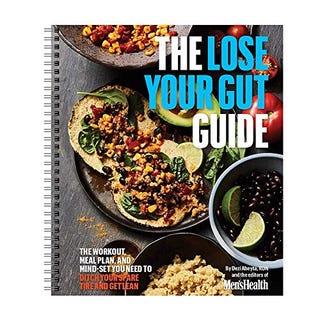
And if you’d like to take a deeper dive to lose those holiday pounds and get back in shape, we recommend a new, comprehensive New Year-New You guide called Lose Your Gut! The 21-Day Plan to Banish Belly Fat Forever from the editors of Men’s Health.

This content is imported from {embed-name}. You may be able to find the same content in another format, or you may be able to find more information, at their web site.

Belly Off Step 1: Follow the Leaders

Goose your motivation and find useful tips by reading weight-loss success stories of readers like you in Men’s Health. Check out this guy who dropped 40 pounds without giving up his favorite foods. And consider these common strategies used by participants in the National Weight Control Registry, which tracks more than 10,000 people who have lost significant amounts of weight and kept it off for long periods:

    • 78% eat breakfast every day.
    • 75% weigh themselves at least once a week.
    • 62% watch less than 10 hours of TV per week.
    • 90% exercise, on average, about 1 hour per day.

Belly Off Step 2: Pack on More Muscle

What looks good under a tight T-shirt can keep belly fat at bay.

blueberry, banana, almond, cinnamon, vegan yogurt, oats, apple

Photographer, Basak Gurbuz Derman

Skeletal muscle is an active tissue that plays a key role in taking up glucose from your bloodstream, burning calories and increasing your metabolism. The more you have, the more you may be protected against insulin resistance and prediabetes, both of which are strongly associated with abdominal fat.

A study in Journal of Clinical Endocrinology and Metabolism, for example, found that every increase in the ratio of skeletal muscle mass to total body weight was associated with an 11% reduction in risk of insulin resistance.

Men's Health

The Workout, Meal Plan, and Mindset You Need to Ditch Your Spare Tire and Get Lean

The Lose Your Gut Guide amazon.com

That’s why building and maintaining muscle becomes increasingly important as you age: less muscle makes weight loss more difficult and weight gain a lot easier.

“Peak muscle mass is between ages 20 and 35 and people start losing muscle in their late 30s,” says Roger Fielding, PhD, senior scientist and director of the Nutrition, Exercise Physiology and Sarcopenia Laboratory at Tufts University. “But we know that resistance exercise can have a profound effect on the quality of life and how successfully you age.”

A large study of more than 10,000 adults published in the journal Obesity demonstrated the impact of weight training on waist circumference over the course of more than a decade. The researchers from the Harvard School of Public Health found that people who spent 20 minutes a day weight training gained less abdominal fat over 12 years than people who spent the same amount of time every day performing cardio exercises.

Belly Off Step 3: Manage Your Cravings with Protein

Caving in to cravings can easily pile on the pounds if you satisfy your hunger with calorie-dense processed snacks and chips and baked goods. But being strategic about your snacks and timing them right can tamp down cravings and help you lose weight. One of the best snacks for accomplishing this is protein because it stimulates hormones that make you feel full and prolongs that feeling.

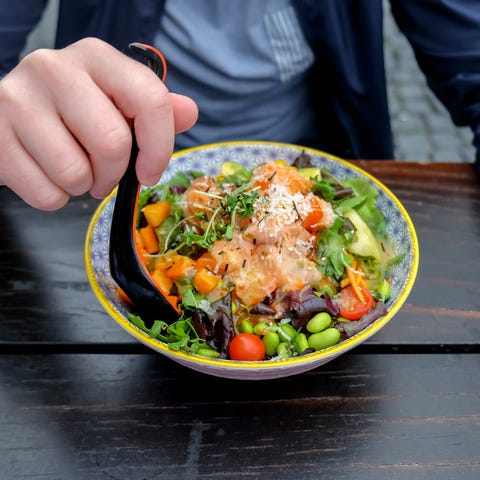
close up one young man eating healthy poke bowl, sitting alone outside a sidewalk café

Kanawa_Studio

Consider this 2014 study in Nutrition Journal that compared a high-protein snack of yogurt to energy-dense, high-fat snacks of crackers and chocolate. Researchers found that participants reported much greater reductions in afternoon hunger after eating the yogurt versus when they ate the chocolate and cracker snack.

And the high-protein snack led to participants consuming around 100 fewer calories at dinner than they did after eating the high fat, high carb processed snacks.

Belly Off Step 4: Speed Up to Burn More Fat

You’ve probably heard this before, but are you doing it?

an old male happy sportsperson standing and resting after the run, arms on hips

Halfpoint Images

We’re talking about really pushing the limit of your cardio capacity by doing high intensity interval training (HIIT). Studies like this one in the Journal of Strength Conditioning Research have shown that you can burn up to 30% more calories doing a speedy exercise session (think running sprints) versus doing a lower-intensity steady-state workout (think walking or jogging) of the same amount of exercise time. HIIT is easy to incorporate into your weekly exercise routine.

For example, when running or cycling, simply alternate short bursts of intense all-out effort for say 20 to 30 seconds with slower and longer recovery segments of a minute or two. You’ll find that your workouts will be shorter by necessity due to the increased intensity of effort.

And you may notice your belly shrinking quicker than ever, suggests a 2018 meta-analysis of 39 studies involving 617 subjects published in Sports Medicine. The researchers reported that MRI scans showed significant visceral fat loss following the HIIT exercise interventions and concluded that “HIIT is a time-efficient strategy to decrease fat-mass deposits.”

Belly Off Step 5: Practice Diversity and Inclusion in Your Gut

You’ve got tons of bacteria crawling around in your intestines already but improving the diversity of that community of bugs in your gut is another powerful belly-slimming strategy.

eating kimchi on the white wooden table top view horizontal

KarpenkovDenis

“Microbiome analysis has revealed a relationship between nutrition, the gut microbiota and a number of human diseases including obesity,” writes National Institutes of Health nutritionist Cindy Davis, PhD, in the journal Nutrition Today.

She points to research suggesting that the composition of bacteria in the gut differs between lean people and those who carry a lot of abdominal fat and that diets high in fat and refined carbohydrates promote the growth of bacteria linked to obesity. One study in the Proceedings of the National Academy of Science linked low bacterial diversity with significant body fat and inflammation.

The researchers discovered that obese participants had more harmful gut microbes called Firmicutes that promote fat storage and 90% fewer Bacteroidetes, a class of bacteria that breaks down starches and fiber for immediate use as energy. You can improve your ratio of fat burning to fat storing gut bugs by eating more fiber-rich plants.

Try fermented cabbage foods like sauerkraut and kimchi, which are a terrific source of probiotics. A recent review of 20 studies involving nearly 2,000 adults in the International Journal of Food Sciences and Nutrition found that eating probiotics reduced both body weight and body mass index in overweight people. Another great way to build a more diverse environment in your gut is eating a fiber-rich Mediterranean-style diet full of vegetables and especially beans, one of the very best foods to build up your Bacteroidetes diversity.

For more belly fat-melting tips and strategies, download Lose Your Gut! The 21-Day Plan to Banish Belly Fat Forever.

This content is created and maintained by a third party, and imported onto this page to help users provide their email addresses. You may be able to find more information about this and similar content at piano.io

Source: https://www.menshealth.com/nutrition/a35036152/how-to-get-rid-of-belly-fat/